The Stanford AI Index 2026 is the most comprehensive data snapshot of where artificial intelligence actually stands. If you lead an organization of any size, several findings deserve your direct attention because they describe what’s happening inside your business right now.
Here’s what the report found, and what it means in practical terms.
Shadow AI Is No Longer Theoretical. It’s Already Here
The 2026 report confirms that generative AI has achieved 53% global population adoption in just three years, a faster uptake than personal computers or the internet in their early phases. Four out of five university students report regular AI use. An estimated 88% of organizations are using AI in some form.
That last number is the one that matters most to you. It means your employees, across every department, at every level, are very likely already using AI tools. Whether they’re using ChatGPT to draft emails, AI to summarize documents, or tools you’ve never approved, it’s happening. Not as a future possibility. Now.
This is what the industry calls shadow AI: the informal, unmanaged use of AI tools that no one approved, no one trained for, and no one is monitoring. Your employees are responding to real productivity pressure, but your organization doesn’t yet have a safe path forward.
The Governance Gap Is Growing Faster Than AI Capability
One of the most striking findings in the 2026 report concerns oversight, not AI performance. The Foundation Model Transparency Index fell from 58 to 40 points, meaning the most capable AI models are providing less visibility into how they work, not more. At the same time, only 31% of Americans trust their government to regulate AI responsibly.
What does that mean for your business? You cannot wait for a policy framework to arrive from Washington. You need your own governance TODAY. The organizations that establish clear AI usage policies and guardrails now will be the ones that avoid the costly, embarrassing, or legally problematic incidents that come with ungoverned AI.
When a cyber insurance carrier, auditor, or board member asks, “How is AI governed in your organization?”, what’s your answer today?
AI Is Disrupting the Workforce. Structure Is the Antidote.
The report documents a 20% employment decline among software developers aged 22-25 since late 2022, coinciding directly with the rise of AI coding tools. Senior developers have been largely unaffected. The pattern is clear: AI is automating entry-level, repeatable tasks while amplifying the output of experienced workers who know how to use it well.
This dynamic plays out in every function, not just software. The employees in your organization who learn to use AI effectively will produce more, make better decisions faster, and free up time for higher-value work. Those who don’t will fall behind because they weren’t given the training, tools, or guidance to adapt.
The difference between an organization that benefits from AI and one that’s disrupted by it is almost always structural. Success depends on how you roll out tools, train your team, and sustain adoption past the first 90 days.
The Investment Numbers Favor Action Now
Global corporate AI investment reached $581.7 billion in 2025, a 130% increase in a single year. The organizations moving fastest aren’t waiting to understand AI perfectly before acting. They’re learning by doing, with the right structure in place to keep that learning safe.
For small and mid-sized organizations, the ones that can’t staff a dedicated AI team or absorb a costly misstep, spending smarter beats spending more. That means a structured, phased approach that starts with governance and builds toward measurable business outcomes.
Join our webinar at the beginning of May to learn more about how to adopt it for your organization. We’ll be live so come ask questions!
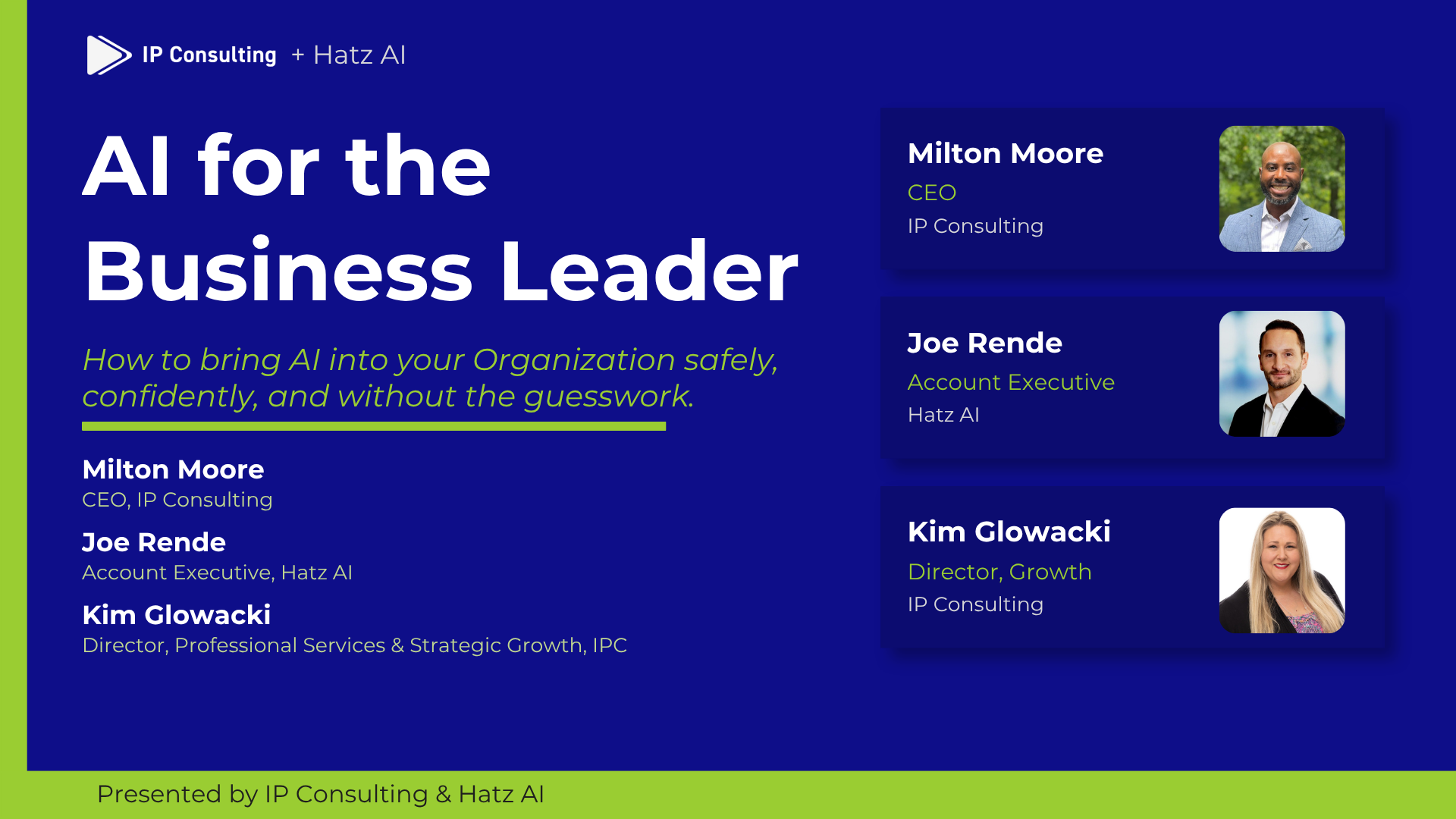
Register here: https://www.ipconsultinginc.com/webinar-ai-for-the-business-leader/
What Safe, Governed, Productive AI Adoption Actually Looks Like
IPC Navigate AI was built in direct response to the environment the Stanford report describes. We designed a managed AI adoption program for organizations that want the competitive advantage of AI without the risk and confusion of unmanaged tools.
The program is built on three pillars because access to AI is only the beginning.
Safe: Governance, guardrails, and approved usage that reduce risk around data exposure, policy misalignment, and inappropriate use. Leadership can authorize AI with confidence.
Governed: Documented standards, visibility dashboards, and controls so that when a board member or auditor asks how AI is managed in your organization, you have a clear, defensible answer.
Productive: Enablement, training, and use-case alignment that turns AI into real efficiency gains, preventing tools from gathering dust after the first month.
IPC Navigate AI delivers a complete managed program: a secure platform with 67+ AI models, IPC’s Clear Path enablement methodology, weekly Drop-In Sessions, monthly success reviews, and a named IPC partner accountable for results past day one.
The Stanford report makes one thing clear: organizations aren’t choosing between using AI and not using AI. That decision has already been made by your employees, whether you sanctioned it or not. The choice in front of leadership now is whether AI in your organization is governed or ungoverned. Productive or risky. A liability or a competitive edge.
Your team is already using AI. IPC Navigate AI makes sure they’re using it safely and that it actually works.
The next step requires a conversation about where you are today, what your biggest risks are, and what a practical first year of governed AI adoption could look like for your organization.
Ready to move from shadow AI to structured adoption? IPC Navigate AI starts with a Clear Path Strategic Planning Session: a structured conversation to map your AI opportunity, surface your biggest risks, and build a Year 1 roadmap aligned to your business goals.
877-568-0230
Data cited in this post is drawn from the Stanford Human-Centered AI Institute’s AI Index Report 2026. Full report available at hai.stanford.edu.
More from this author:
The Stanford AI Index 2026 is the most comprehensive data snapshot of where artificial intelligence actually stands. If you lead…
It’s Already Happening Most companies didn’t decide to adopt unvetted artificial intelligence. It happened quietly, one productivity shortcut at a…
Most small and medium-sized businesses have an AI problem they cannot see. Their employees are already using AI tools every…
75% of organizations are already using AI in some form. And 78% of them have no policies, no controls, and…
You open ChatGPT. You type a question. The AI answers in seconds. What just happened under the hood? Most people…
If you’re a leader right now, AI probably feels like two things at once: I can’t ignore this. I can’t…
Cyber Resilience Is a Team Sport: How the Right MSP and Cyber Insurance Work Better Together At 8:17 a.m. on…
The day VMware stopped being boring, everything changed. For years, VMware was the infrastructure equivalent of plumbing. Nobody talked about…
I want to tell you about a privacy problem that doesn’t look like a privacy problem. It looks like a…
If your business is still running VMware infrastructure, the latest VMware news around remote code execution (RCE) vulnerability in vCenter…